
إجابات واضحة تساعدك على اختيار إطاراتك وطلبها والعناية بها بثقة.
كيف يمكنني التحقق من قياس الإطار؟
قياس الإطار مطبوع على جانب الإطار في المكان المعروف بالجدار الجانبي، عند البحث عن القياس فسترى أنه يتألف من سلسلة من الأرقام والحروف، ويمكن أن نوضح هذا من خلال المثال المذكور والمقسم على النحو التالي:
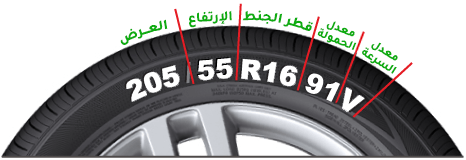
205: عرض الإطار بالمليمتر
55: ارتفاع الجدار الجانبي للإطار بالنسبة للعرض، وفي هذه الحالة تكون النسبة 55% وهذه النسبة معروفة أيضا "بنسبة العرض إلى الارتفاع".
R16: قطر الحافة الداخلية للإطار بالبوصة.
91: مقدار معدل الحمل الخاص بالإطار.
V: مقدار معدل السرعة ويشير إلى أقصى سرعة للإطار في حال الوصول إلى أقصى مقدار تحميل.
يمكنك أيضا استخدام أداة البحث عن سجل السيارة على الصفحة الرئيسية لموقعcheap-tyre.com ، حيث يمكنك التحقق من البيانات الموجود لدى هيئة ترخيص السائق والمركبة DVLA لمعرفة قياس الإطار المناسب لمركبتك.
عند استخدام هذه الأداة فإننا ننصح بالتحقق مرتين من القياس الموضح مقابل ما قمت بتركيبه مؤخرا على مركبتك حيث قد ينصح بقياسات متعددة وفقا لعمر وطراز المركبة.
يمكنك تغيير حجم الإطار ولكن بحرص شديد، وعليك إتباع التعليمات والمعايير الخاصة بتغيير حجم الإطار لسيارتك.
من المهم تذكر أن عليك المحافظة على القُطر مساويًا بقدر الإمكان للقُطر الأصلي.
فإذا تباين القُطر بدرجة كبيرة سوف يؤثر ذلك على وقت/طول دوران الإطار بلفة كاملة (محيط دوران الإطار) مما سيتسبب في ظهور قراءات غير صحيحة على عداد السرعة وسيتأثر تعشيق التروس سلبًا.
برجاء عدم استخدام حجم مختلف للإطار دون استشارة خبير أولًا. هناك عدة مواقع إلكترونية يمكنها مساعدة في ذلك الأمر. لن تتحمل شركة "Cheaptyre " أو الميكانيكيون العاملون بالشركة، مسؤولية أي تعديل في حجم الإطارات المثبتة والذي قد يؤدي إلى مشكلات متعلقة بأداء السيارة أو تلفها.